Think about spotting an ideal wheel set. The surface looks spotless. The style stands out boldly. The cost matches your budget well. Delivery comes. You raise your car on a jack. Suddenly, the bolts fail to match up. Or the wheel mounts on the studs but shakes hard at 60 mph. These problems usually arise from skipping two vital specs: PCD and Center Bore.
Vesteon has honed wheel matching since 2005. Our output reaches 3 million units each year. We know that putting quality first involves more than a glossy look. It calls for a flawless match on every wheel.
Decoding PCD: The Bolt Pattern Blueprint
PCD refers to Pitch Circle Diameter. This measures the size of the circle drawn through the middle of all wheel bolts or studs. A 5×112 PCD setup includes five bolts placed along a 112mm circle.
How to Measure Your PCD Without Errors
Checking PCD proves challenging, above all on 5-lug wheels. The holes there lack direct opposition.
- 4, 6, or 8-Lug Wheels: Check the distance from one stud’s center to the opposite one’s center.
- 5-Lug Wheels: Measure from one hole’s outer edge to the center of the next hole over.
- The Professional Way: Many vehicle owners check their model’s built-in details. Vesteon’s OEM services let us tailor the PCD to fit any car, whether a simple sedan or a premium Bentley.
Why Precision PCD Matters for High-Torque Vehicles
Cars with strong torque, like altered sports cars or robust trucks, suffer from off or close PCD fits. Such mismatches can shear bolts.
- The Vesteon Solution: We employ CNC-controlled milling machines so that each bolt hole gets drilled to exact standards.
- Strength at the Core: Our forging method applies 10,000 tons of pressure. The metal near the PCD ends up much tighter and tougher than in regular casting. Bolts thus remain solid amid heavy demands.
The Center Bore: Your Wheel’s Foundation
The Center Bore (CB) forms the central cut in the wheel that goes over the car’s hub. Bolts keep the wheel in place. Yet the center bore carries the vehicle’s load in a hub-centric setup.

Hub-Centric vs. Lug-Centric: Choosing Stability
- Hub-Centric: The wheel’s bore lines up with the hub precisely. It sets the benchmark for secure and even driving.
- Lug-Centric: The wheel counts on bolts alone for alignment. This commonly brings on steering wheel wobble. The reason? Bolts struggle to center the wheel during quick spins.
- Vesteon’s Approach: We suggest hub-centric options when they suit. Our Replica Alloy Wheel line matches OEM bores to a tee. It delivers the smooth handling of original equipment.
How Vesteon Uses CNC Milling for Millimeter Precision
A center bore just 0.5mm too wide sparks obvious shakes.
- Precision Engineering: Each Vesteon rim gets its final shape and bore size from a CNC machine.
- Application: The work runs about five hours. It features a hand-finishing step to smooth out burrs. The wheel then glides onto the hub without hitches.
The Vesteon Engineering Solution: Eliminating High-Speed Shakes and Bolt Stress
Grasping the specs counts. Still, their fix for everyday road challenges reveals true benefit.
Case Study: Improving Stability for High-Performance EVs
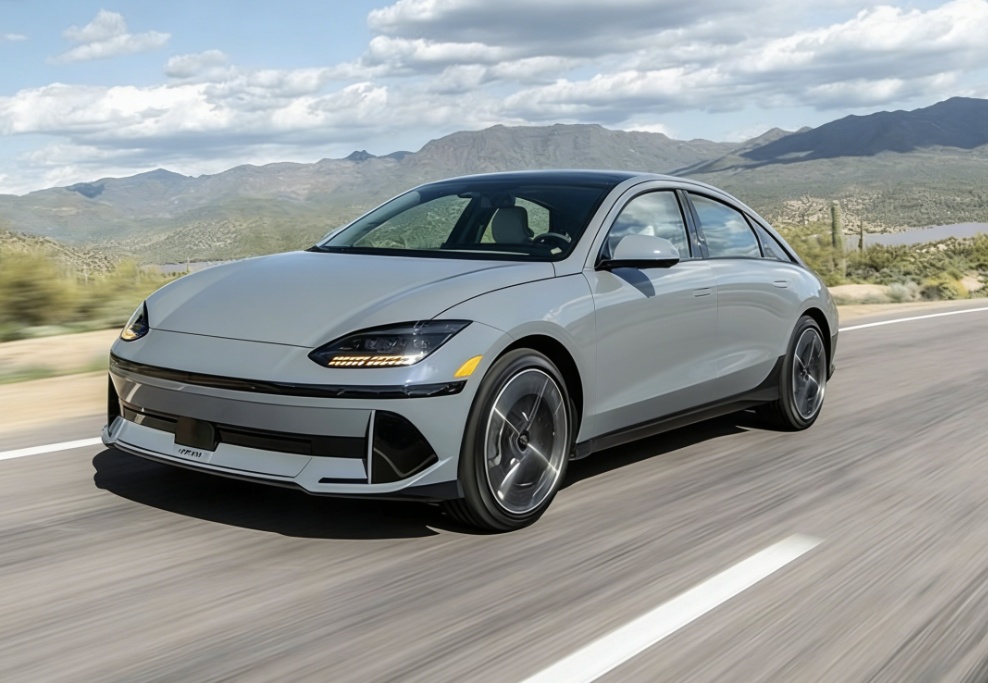
Tesla drivers and owners of other quick EVs often experience range loss and shake problems with replacement wheels.
- The Problem: Bulky wheels with loose bores boost resistance and trigger small shakes. These sap battery power over time.
- The Solution: Vesteon’s lightweight forged monoblock wheels (like the VT-005) apply Finite Element Analysis (FEA) to cut excess pounds. They hold exact hub-centric alignment. Unsprung weight drops. Shakes vanish. Charge distance stretches farther.
Heavy-Duty Applications: Safety in 4×4 and Trucking
Off-road explorers and heavy haulers depend on wheel fit for protection.
- The Problem: Rough paths deliver huge side loads to wheels. Flawed PCD or center bore invites stress cracks in the hub.
- The Solution: Our 4×4 casting alloy wheels and forged truck wheels stand up to brutal ground. High capacity ratings and a tight fit spread vehicle load across the hub. Failures stay off the table, even in isolated spots.
The Vesteon Advantage: Engineering for Perfection
Vesteon sees a wheel’s worth in its backing tech.
10,000 Tons of Pressure: Beyond Standard Casting
Low-cost wheels typically use gravity casting. This traps small voids in the material.
- Forged Excellence: Vesteon’s 1-piece, 2-piece, and 3-piece forged wheels take shape under 10,000 tons of pressure.
- The Result: It builds a dense grain for greater power and firmness. We shape slimmer, detailed spokes that clear safety rules with room to spare.
100% Quality Assurance: The Testing Standard
We test wheels to back their fit, not wish for it. Each one passes tough trials at our Shandong site before shipping.
- Our Battery of Tests: We carry out Air-Leakage, Balance, Stress, Running, and Impact tests.
- Global Certifications: Our production follows the ISO/9001 system. Products meet American SFI, German TUV, and Japanese VIA standards.
Conclusion: Confidence in Every Rotation
Picking new wheels need not feel like a gamble. Learn your PCD and Center Bore. Your car then drives safely, thriftily, and steadily at every speed. Vesteon supplies the know-how for Classic Steel Wheels, Aftermarket Alloys, or Custom Forged Rims that fit just right.
Ready to upgrade your vehicle with precision-engineered wheels? Vesteon handles wholesale, agency, and custom OEM needs. A 3-year after-sales service comes standard, along with global shipping choices like DDP. We serve as your steady auto partner.
- Email: info@vesteonchina.com
- WhatsApp: +8615153206818
FAQ
Q: Can I use a wheel with a different PCD if I use an adapter?
A: Adapters do exist. However, they alter the wheel’s offset and introduce weak spots. Ordering wheels with the proper PCD for your hub stays safer and smoother.
Q: What happens if my wheel’s center bore is larger than my car’s hub?
A: Shakes appear at higher speeds. “Hub-centric rings” fill the space, but a wheel with the right bore size works best.
Q: Does a forged wheel offer better fitment than a cast wheel?
A: CNC machining sets the fit level. Forged wheels, though, permit finer hub work because of their stronger makeup.
Q: How do I find my car’s PCD and Center Bore?
A: Look in your owner’s manual, on the driver’s door sticker, or in a solid online fitment tool.
Q: Are all 5-lug wheels the same PCD?
A: No. Usual 5-lug types cover 5×112 (European), 5×114.3 (Japanese/American), and 5×120 (BMW). They do not swap out.
